COMPANY
  PRODUCT
  APPLICATION
  EVENT & NEWS
 CONTACT
 MORE
MORE  SEARCH
  EVENT & NEWS






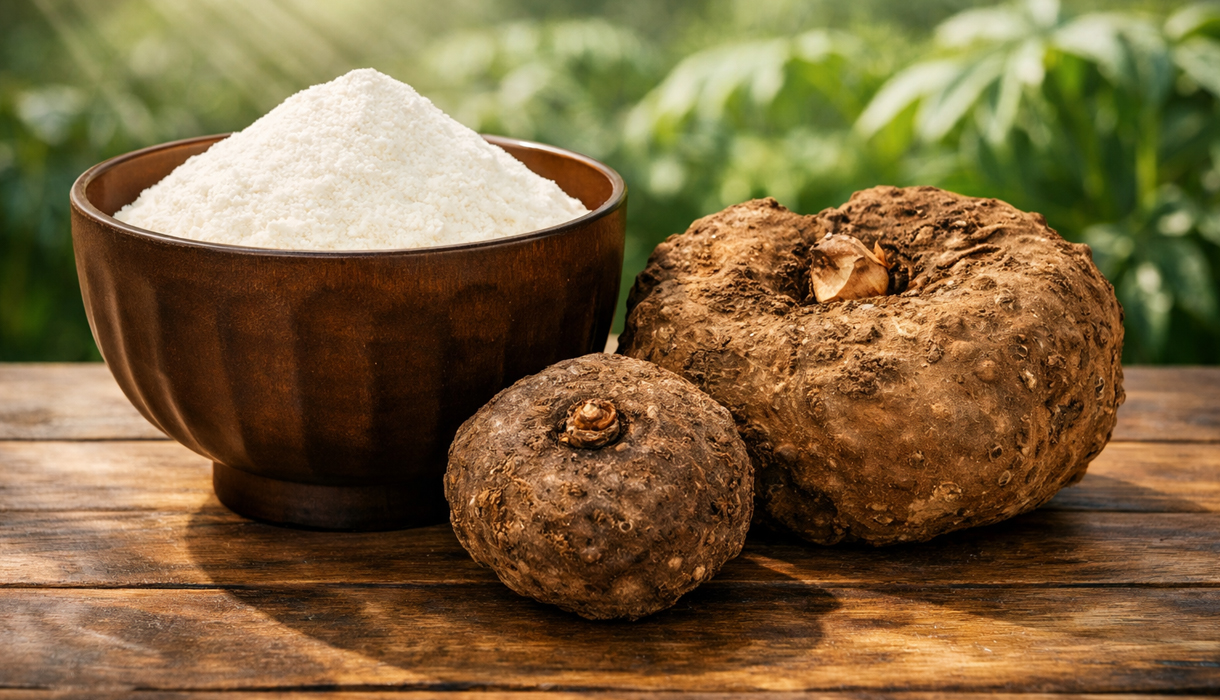
In recent months, the response to our work on botanical authentication in konjac has been both encouraging and instructive. Customers, partners, and regulatory stakeholders alike have expressed strong interest in the measures we have put in place to ensure full compliance with food legislation. This growing engagement has reinforced our conviction that botanical authenticity is not only a regulatory requirement, but a shared priority across the food industry.
As previously outlined, European and U.S. food legislation clearly stipulate that food additives and ingredients of botanical origin must be taxonomically verified, including through genetic identification where appropriate. This requirement applies equally to additives such as E 425(i) (konjac gum) and E 425(ii) (konjac glucomannan), which are legally recognized only when derived from Amorphophallus konjac of the Araceae family.
While other Amorphophallus species are traditionally used in certain regions, they are not authorized for food use under EU or U.S. regulations unless approved through the relevant novel food pathways. As a result, ensuring the precise botanical origin of konjac-derived ingredients remains essential for regulatory compliance, market access, and consumer trust.
The continued interest from our customers—particularly around traceability, documentation, and analytical robustness—has motivated us to further emphasize and consolidate the genetic authentication framework we have already established. Developed in collaboration with the University of Trieste and the Genomics and Epigenomics Laboratory of AREA Science Park, our protocol combines classical morphological and taxonomical assessment with DNA extraction, sequencing, and bioinformatic analysis against validated reference databases.
Through sequence quality evaluation, alignment with reference genetic markers, and phylogenetic analysis, we are able to confirm the taxonomic identity of Amorphophallus konjac with a high degree of confidence. The authenticated DNA sequence is securely archived at our headquarters and can be made available upon justified request, supporting transparency and regulatory review.
By applying this comprehensive analytical procedure to all commercial glucomannan powders labeled as E 425(i) and E 425(ii), Java Biocolloid Europe continues to ensure full alignment with current food legislation. More importantly, we are responding directly to our customers’ expectations for clarity, scientific rigor, and legal certainty.
The strong market interest we have observed confirms that botanical authenticity is no longer a niche concern—it is a fundamental element of responsible ingredient sourcing. We remain committed to advancing these standards and to working closely with our partners to support both compliance and innovation in functional food applications.
We welcome continued dialogue and invite you to contact us for further information on our certified konjac products and our ongoing work in botanical authentication.